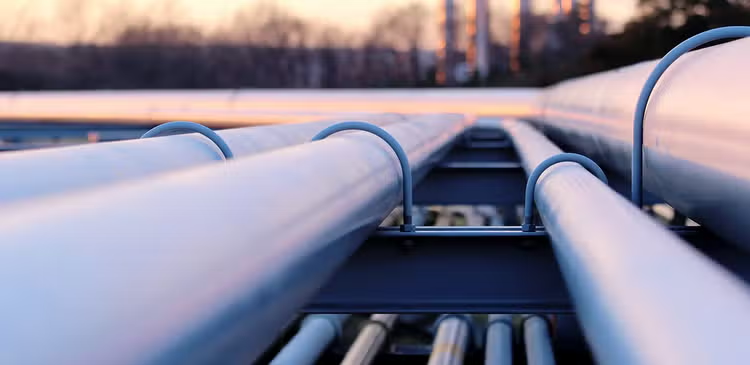
Unconventional Oil & Gas
Upstream oil & gas technologies for unconventional oil & gas extraction applications.
Efficient water treatment technologies for unconventional oil & gas extraction methods
Unconventional oil and gas extraction refers to extraction methods other than traditional vertical oil well pumping. The distinction arises from the accessibility of oil deposits and the unusual nature of their reservoirs. The unconventional oil extraction process requires the use of new, often complex, extraction methods such as developing oil sands (also known as tar sands or bituminous sands), hydraulic fracturing, and directional drilling. As unconventional oil and gas extraction processes become more popular, environmental concerns remain. Water treatment in unconventional oil and gas extraction is necessary to control groundwater contamination and reduce the reliance on scarce surface water.
Oil & Gas - Unconventional Brochure
View all product data sheets for our unconventional oil & gas products.
Innovative water treatment solutions for unconventional oil & gas extraction
Learn about our innovative water treatment solutions for unconventional oil & gas extraction methods. Shale Oil Production Coal Seam Gas Extraction Steam-Assisted Gravity Drainage (SAGD) Oil Production
Minimum Liquid Discharge reclamation processes to treat hyper-saline shale oil wastewater
Shale oil is an unconventional oil that is extracted directly from shale rock formations by means of hydraulic fracturing. Hydraulic fracturing requires a large amount of water, but it does not need to be of drinking water quality. Water used in oil and gas production can come from recycled water, or flowback water. Flowback water contains fracturing fluid, hydrocarbons, minerals, and other substances that flow back from the deep sub-surface and must be treated before recycling.
New advances in minimum liquid discharge (MLD) desalination processes can play a key role in treating hyper-saline shale oil wastewater. MLD reclamation installations in shale oil applications may use a variety of technologies to treat hyper-saline shale oil wastewater:
- A combination of polymeric adsorbents for the removal of oil, organics, and BTEX (benzene, toluene, ethylbenzene, and xylene) recovery
- Weak acid cation exchange resins such as DuPont™ AmberLite™ IRC83 H and DuPont™ AmberLite™ HPR8300 H can be used for hardness removal
- FilmTec™ Fortilife™ XC-N nanofiltration elements can be used for produced water make-up
- Reverse osmosis elements such as FilmTec™ SW30XFR-400/34, FilmTec™ Fortilife™ XC70, FilmTec™ SW30XHR series, or DuPont™ XUS180808 for the treatment of high salinity streams
View all products for Shale Oil
High-recovery solutions for coal seam gas wastewater treatment
Coal seam gas (CSG) is a type of natural gas that is found in coal deposits. It is classified as an unconventional gas resource because it contains a high concentration of methane. CSG is produced by extracting water from the formation, which reduces the pressure and releases the gas from the coal seam. The gas extraction process produces a significant amount of produced water with extremely variable water quality. The produced water can have TDS levels between 1000-9000 ppm and other harmful substances, like chemical additives and bitumen. These harmful substances may negatively impact the environment and must be removed.
Many facilities opt for high-recovery solutions which allow for the beneficial reuse of treated wastewater. This typically includes an ultrafiltration (UF) pretreatment system, ion exchange resins for softening, and reverse osmosis (RO) membranes for the removal of dissolved salts. Installations in CSG applications can use technologies including:
- DuPont™ IntegraTec™ SFP-2880 and DuPont™ IntegraTec™ XP 77 UF modules
- DuPont™ AmberLite™ IRC83 H, a stable ion exchange product with extremely high capacity
- Low-pressure antifouling RO elements including FilmTec™ SW30XFR-400/34, FilmTec™ BW30XFRLE-400/34, FilmTec™ ECO PRO-400, and the FilmTec™ Fortilife™ series
- DuPont™ XUS180808 ultra-high pressure RO elements for high-recovery and high-pressure systems
View all products for Coal Seam Gas
Treating and recycling produced water in steam-assisted gravity drainage facilities
Steam-assisted gravity drainage (SAGD) is an enhanced oil recovery (EOR) technique for producing crude oil and bitumen. SAGD is a process in which steam is injected into the reservoir through an upper well to reduce the oil’s viscosity. The heated oil then drains, by gravity, into a lower wellbore, where it is then pumped out. The steam condenses inside the formation generating large quantities of produced water that consists of oil, grease, silica, hardness, and organics.
Regulations limit freshwater withdrawal and produced water disposal, forcing the oil & gas industry to recycle and reuse more than 95% of their water. The produced water must be treated before reuse as bitumen production requires continuous steaming, and boilers require clean water to prevent scaling. A viable wastewater treatment process is crucial to maximizing the production of SAGD oil extraction.
Most SAGD facilities use a variety of treatment steps to remove silica, suspended solids, and dissolved calcium and magnesium ions. DuPont™ AmberLite™ IRC83 H ion exchange resins can be used for water hardness removal. Plants using strong acid cation resins may use DuPont™ AmberLite™ IRC120 Na or DuPont™ AmberLite™ HPR1100 Na. The implementation of FilmTec™ ECO PRO and FilmTec™ Fortilife™ reverse osmosis elements can successfully aid recovery in tailing pond management. (<90%) compared to reverse osmosis membranes.
View all products for SAGD
-
Shale Oil Production+
Minimum Liquid Discharge reclamation processes to treat hyper-saline shale oil wastewater
Shale oil is an unconventional oil that is extracted directly from shale rock formations by means of hydraulic fracturing. Hydraulic fracturing requires a large amount of water, but it does not need to be of drinking water quality. Water used in oil and gas production can come from recycled water, or flowback water. Flowback water contains fracturing fluid, hydrocarbons, minerals, and other substances that flow back from the deep sub-surface and must be treated before recycling.
New advances in minimum liquid discharge (MLD) desalination processes can play a key role in treating hyper-saline shale oil wastewater. MLD reclamation installations in shale oil applications may use a variety of technologies to treat hyper-saline shale oil wastewater:
- A combination of polymeric adsorbents for the removal of oil, organics, and BTEX (benzene, toluene, ethylbenzene, and xylene) recovery
- Weak acid cation exchange resins such as DuPont™ AmberLite™ IRC83 H and DuPont™ AmberLite™ HPR8300 H can be used for hardness removal
- FilmTec™ Fortilife™ XC-N nanofiltration elements can be used for produced water make-up
- Reverse osmosis elements such as FilmTec™ SW30XFR-400/34, FilmTec™ Fortilife™ XC70, FilmTec™ SW30XHR series, or DuPont™ XUS180808 for the treatment of high salinity streams
View all products for Shale Oil
-
Coal Seam Gas Extraction+
High-recovery solutions for coal seam gas wastewater treatment
Coal seam gas (CSG) is a type of natural gas that is found in coal deposits. It is classified as an unconventional gas resource because it contains a high concentration of methane. CSG is produced by extracting water from the formation, which reduces the pressure and releases the gas from the coal seam. The gas extraction process produces a significant amount of produced water with extremely variable water quality. The produced water can have TDS levels between 1000-9000 ppm and other harmful substances, like chemical additives and bitumen. These harmful substances may negatively impact the environment and must be removed.
Many facilities opt for high-recovery solutions which allow for the beneficial reuse of treated wastewater. This typically includes an ultrafiltration (UF) pretreatment system, ion exchange resins for softening, and reverse osmosis (RO) membranes for the removal of dissolved salts. Installations in CSG applications can use technologies including:- DuPont™ IntegraTec™ SFP-2880 and DuPont™ IntegraTec™ XP 77 UF modules
- DuPont™ AmberLite™ IRC83 H, a stable ion exchange product with extremely high capacity
- Low-pressure antifouling RO elements including FilmTec™ SW30XFR-400/34, FilmTec™ BW30XFRLE-400/34, FilmTec™ ECO PRO-400, and the FilmTec™ Fortilife™ series
- DuPont™ XUS180808 ultra-high pressure RO elements for high-recovery and high-pressure systems
View all products for Coal Seam Gas
-
Steam-Assisted Gravity Drainage (SAGD) Oil Production+
Treating and recycling produced water in steam-assisted gravity drainage facilities
Steam-assisted gravity drainage (SAGD) is an enhanced oil recovery (EOR) technique for producing crude oil and bitumen. SAGD is a process in which steam is injected into the reservoir through an upper well to reduce the oil’s viscosity. The heated oil then drains, by gravity, into a lower wellbore, where it is then pumped out. The steam condenses inside the formation generating large quantities of produced water that consists of oil, grease, silica, hardness, and organics.
Regulations limit freshwater withdrawal and produced water disposal, forcing the oil & gas industry to recycle and reuse more than 95% of their water. The produced water must be treated before reuse as bitumen production requires continuous steaming, and boilers require clean water to prevent scaling. A viable wastewater treatment process is crucial to maximizing the production of SAGD oil extraction.
Most SAGD facilities use a variety of treatment steps to remove silica, suspended solids, and dissolved calcium and magnesium ions. DuPont™ AmberLite™ IRC83 H ion exchange resins can be used for water hardness removal. Plants using strong acid cation resins may use DuPont™ AmberLite™ IRC120 Na or DuPont™ AmberLite™ HPR1100 Na. The implementation of FilmTec™ ECO PRO and FilmTec™ Fortilife™ reverse osmosis elements can successfully aid recovery in tailing pond management. (<90%) compared to reverse osmosis membranes.
View all products for SAGD
Find water treatment products for unconventional oil & gas extraction applications
View a list of innovative products for unconventional oil & gas water treatment.
Explore other oil & gas applications
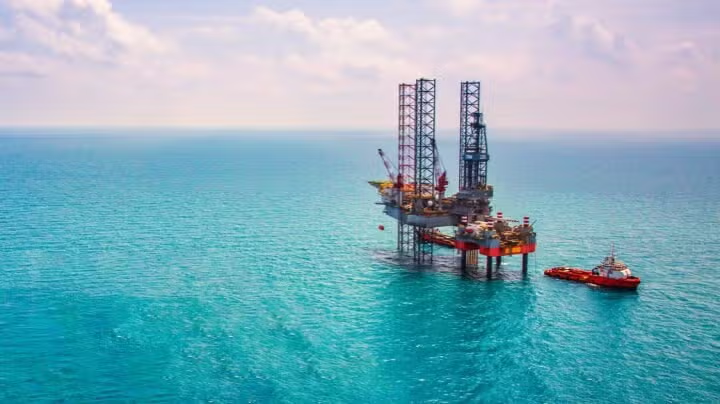
We help energy companies improve operational efficiency with specialized water treatment and wastewater reuse.
Learn more
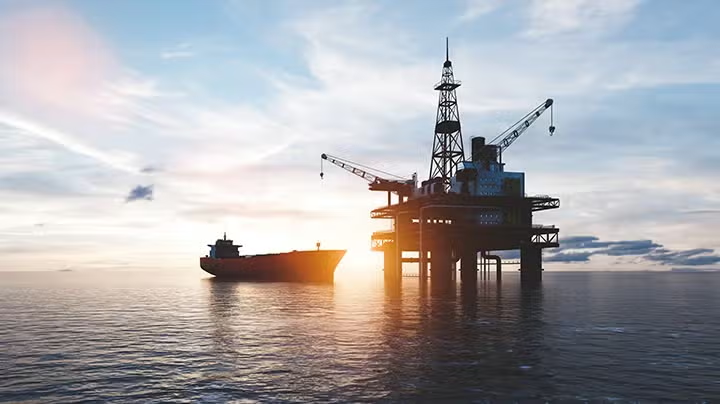
Injection water quality is critical to improve oil recovery. We provide injection water treatment solutions that can be used for sulfate removal, offshore desalination, and more.
Learn more
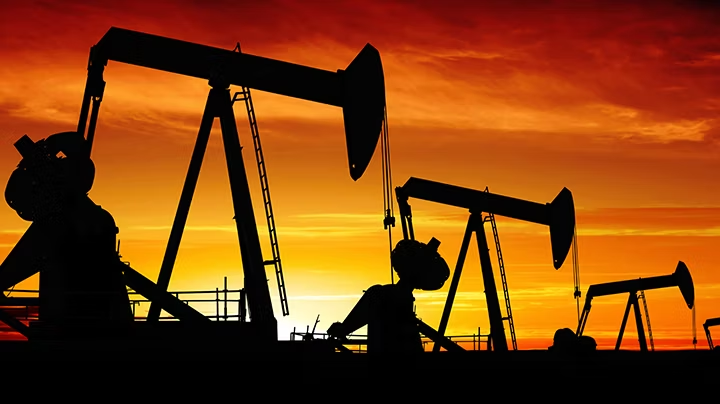
We offer cost-effective upstream oil & gas technologies for enhanced oil recovery and contaminant removal from produced water.


Related resources
View by: View all resources ✕ ✕ To access secured content from DuPont Please Sign In or Sign Up below Sign In New User ? Sign Up
See what’s possible
Ask how we can help with your unconventional oil & gas water treatment needs.