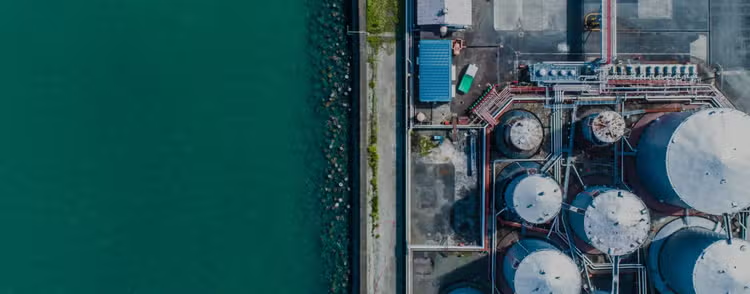
Chemical Processing
Purification and separation solutions for the specialty chemical and petrochemical industry.
Ion exchange purification, separation, and recovery solutions for the specialty chemical processing industry
Chemistry is essential for meeting our basic needs. Technologies today enrich our lives and enable plants, animals, and humans to thrive around the world from food and clothing to shelter and healthcare.
Our ion exchange resins are used to produce, purify and recover some of the most commercially important products around the world and address industry standards for quality and performance. DuPont offers a full range of products and technologies to help your operation run at peak levels, including feed stock purification, brine and acid purification, as well as chlorine-based solutions and metal-based hydroxide solutions.
Ion Exchange Resins and Membrane Technologies for Chemical Processing
Explore our portfolio to help you with your purification and separation challenges.
View all product data sheets associated with the chemical processing market.
Specialty Chemical and Petrochemical Processing Applications
Producing, purifying, and recovering a diverse range of high-value chemicals and materials with ion exchange resins and adsorbents. Acid Purification and Concentration Adipic Acid Biodiesel Synthesis and Purification Boron Removal Caustic Purification Chlor-Alkali Colloidal Silica Deacidification Gas Treatment Hydrogen Peroxide (H202) Purification Metal Recovery Organics Removal
Supporting acid production
DuPont strong base anion resins are employed in the manufacture of certain mineral acids, including hydrochloric acids. These resins eliminate undesired impurities, including Fe(III) and Zn(II), as negatively charged chloro-complexes. In conjunction with ion exchange resins, acid stable FilmTec™ elements may be used for the concentration and purification of acid streams.
View more content on acid purification in our resource center.
Impurity removal for adiponitrile manufacturing processes
Adiponitrile is used as a precursor to manufacture nylon. The production of adiponitrile, however, tends to produce impurities. Our DuPont™ AmberSep™ ion exchange resins can be used to remove these impurities efficiently and cost-effectively.
View more content on adipic acid in our resource center.
Supporting the manufacture of biodiesel
Biodiesel is a fuel derived primarily from the methanol esters of vegetable oil and used for transportation, stationary power and more. Supporting the manufacturing of biodiesel, we offer a range of DuPont™ AmberSep™ ion exchange resins that are used in the manufacturing of biodiesel fuels.
View more content on biodiesel in our resource center.
Selective ion exchange resins for removal of metalloids and minerals
The element boron is naturally occurring in coal and fossil fuels, and is commonly incorporated into commercial products, including detergents. Our selective anion DuPont™ AmberSep™ ion exchange resins help meet wastewater discharge and product requirements.
View more content on boron removal in our resource center.
Chloride removal from caustic
Chloride is a common contaminant in sodium hydroxide, but for many applications, low-chloride caustic is required. Our unique amphoteric ion exchange resins, which combine weak acid cation with strong base anion functionality inside the beads, have proven to be a reliable and economical solution.
View more content on caustic purification in our resource center.
Solutions throughout the chlor-alkali process
The only cost-effective way to produce commercial quantities of chlorine gas and metal hydroxides is by electrolysis of brine solutions in a chlor-alkali cell. Our DuPont™ AmberSep™ ion exchange resins play an essential role in the purification of chloride alkali brines as well as the elimination of mercury and sulfate to safeguard the electrolytic cells, thus helping to reduce the associated maintenance costs.
View more content on chlor-alkali in our resource center.
Supporting colloidal silica purification and synthesis
Silica can exist as a polymer, referred to as colloidal silica, but will easily break down and volatilize under high temperature and pressure. Our membrane technologies such as reverse osmosis and ultrafiltration are effective at removing virtually all colloidal silica. For the synthesis of silica sols from sodium silicate, either weak acid or strong acid cation DuPont™ AmberSep™ ion exchange resins are used.
View more content on colloidal silica synthesis in our resource center.
Removal of sulfuric and organic acids from production processes
Sulfuric acid is typically used in the production of various chemicals, such as phenol and acetone. It is necessary, however, to remove traces of sulfuric acid prior to downstream distillation units. For decades, our weak base anion resins have successfully been used to remove sulfuric acid. Depending on the pKa value, by-products while synthesizing phenol and acetone, such as organic acids, may be removed as well.
View more content on deacidification in our resource center.
Purification of gases, vapors, and liquids
Dry DuPont™ AmberSep™ ion exchange resins, or dry adsorbents, are used for the purification of gases to remove impurities like acids, bases, or organic compounds.
View more content on gas treatment in our resource center.
Purification solutions to support production of H202
Hydrogen peroxide is used as a chemical reagent for oxidation. The production process may generate low levels of dissolved organics that are generally derivatives of quinone. With careful attention to the possibility of dangerous oxidation of the resin, our polymeric adsorbents can be used to remove these organics in order to produce high-purity hydrogen peroxide. Further to this, strong acid cation and strong base anion DuPont™ AmberSep™ ion exchange resins can be used to remove salts in order to produce high purity grades of H2O2.
View more content on H2O2 purification in our resource center.
Cost effective, efficient and sustainable solutions for removal and recovery of metals
When metals, such as chromium, cadmium, nickel, copper, lithium, lead and zinc, are added to a plating bath, some of the metal ions get rinsed off. These can be recovered in the rise water, levering DuPont™ AmberSep™ ion exchange resins in the rinse water, helping to save raw material costs as well as avoiding excess discharge.
In order to remove mercury from both brine and wastewater streams, highly-selective chelating solvents are employed that combine high capacities with very low leakage. They can either be disposed after usage or regenerated with concentrated hydrochloric acid.
View more content on metal recovery in our resource center.
Efficient solutions for organics removal
For the removal of organic compounds such as chlorinated hydrocarbons, DuPont™ AmberSep™ adsorbents can be used. Regeneration can be carried out with either steam or certain organic solvents.
View more content on organics removal in our resource center.
-
Acid Purification and Concentration+
Supporting acid production
DuPont strong base anion resins are employed in the manufacture of certain mineral acids, including hydrochloric acids. These resins eliminate undesired impurities, including Fe(III) and Zn(II), as negatively charged chloro-complexes. In conjunction with ion exchange resins, acid stable FilmTec™ elements may be used for the concentration and purification of acid streams.
View more content on acid purification in our resource center.
-
Adipic Acid+
Impurity removal for adiponitrile manufacturing processes
Adiponitrile is used as a precursor to manufacture nylon. The production of adiponitrile, however, tends to produce impurities. Our DuPont™ AmberSep™ ion exchange resins can be used to remove these impurities efficiently and cost-effectively.
-
Biodiesel Synthesis and Purification+
Supporting the manufacture of biodiesel
Biodiesel is a fuel derived primarily from the methanol esters of vegetable oil and used for transportation, stationary power and more. Supporting the manufacturing of biodiesel, we offer a range of DuPont™ AmberSep™ ion exchange resins that are used in the manufacturing of biodiesel fuels.
-
Boron Removal+
Selective ion exchange resins for removal of metalloids and minerals
The element boron is naturally occurring in coal and fossil fuels, and is commonly incorporated into commercial products, including detergents. Our selective anion DuPont™ AmberSep™ ion exchange resins help meet wastewater discharge and product requirements.
-
Caustic Purification+
Chloride removal from caustic
Chloride is a common contaminant in sodium hydroxide, but for many applications, low-chloride caustic is required. Our unique amphoteric ion exchange resins, which combine weak acid cation with strong base anion functionality inside the beads, have proven to be a reliable and economical solution.
View more content on caustic purification in our resource center.
-
Chlor-Alkali+
Solutions throughout the chlor-alkali process
The only cost-effective way to produce commercial quantities of chlorine gas and metal hydroxides is by electrolysis of brine solutions in a chlor-alkali cell. Our DuPont™ AmberSep™ ion exchange resins play an essential role in the purification of chloride alkali brines as well as the elimination of mercury and sulfate to safeguard the electrolytic cells, thus helping to reduce the associated maintenance costs.
-
Colloidal Silica+
Supporting colloidal silica purification and synthesis
Silica can exist as a polymer, referred to as colloidal silica, but will easily break down and volatilize under high temperature and pressure. Our membrane technologies such as reverse osmosis and ultrafiltration are effective at removing virtually all colloidal silica. For the synthesis of silica sols from sodium silicate, either weak acid or strong acid cation DuPont™ AmberSep™ ion exchange resins are used.
View more content on colloidal silica synthesis in our resource center.
-
Deacidification+
Removal of sulfuric and organic acids from production processes
Sulfuric acid is typically used in the production of various chemicals, such as phenol and acetone. It is necessary, however, to remove traces of sulfuric acid prior to downstream distillation units. For decades, our weak base anion resins have successfully been used to remove sulfuric acid. Depending on the pKa value, by-products while synthesizing phenol and acetone, such as organic acids, may be removed as well.
View more content on deacidification in our resource center.
-
Gas Treatment+
Purification of gases, vapors, and liquids
Dry DuPont™ AmberSep™ ion exchange resins, or dry adsorbents, are used for the purification of gases to remove impurities like acids, bases, or organic compounds.
-
Hydrogen Peroxide (H202) Purification+
Purification solutions to support production of H202
Hydrogen peroxide is used as a chemical reagent for oxidation. The production process may generate low levels of dissolved organics that are generally derivatives of quinone. With careful attention to the possibility of dangerous oxidation of the resin, our polymeric adsorbents can be used to remove these organics in order to produce high-purity hydrogen peroxide. Further to this, strong acid cation and strong base anion DuPont™ AmberSep™ ion exchange resins can be used to remove salts in order to produce high purity grades of H2O2.
View more content on H2O2 purification in our resource center.
-
Metal Recovery+
Cost effective, efficient and sustainable solutions for removal and recovery of metals
When metals, such as chromium, cadmium, nickel, copper, lithium, lead and zinc, are added to a plating bath, some of the metal ions get rinsed off. These can be recovered in the rise water, levering DuPont™ AmberSep™ ion exchange resins in the rinse water, helping to save raw material costs as well as avoiding excess discharge.
In order to remove mercury from both brine and wastewater streams, highly-selective chelating solvents are employed that combine high capacities with very low leakage. They can either be disposed after usage or regenerated with concentrated hydrochloric acid.
-
Organics Removal+
Efficient solutions for organics removal
For the removal of organic compounds such as chlorinated hydrocarbons, DuPont™ AmberSep™ adsorbents can be used. Regeneration can be carried out with either steam or certain organic solvents.
View more content on organics removal in our resource center.
Find products for chemical processing applications
View a list of products suitable for chemical processing.
Related industries
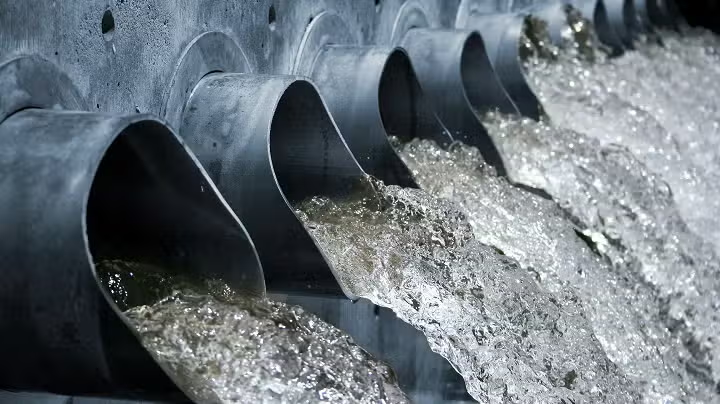
We develop best-in-class technologies, accompanied by an advanced product portfolio of solutions, to address your crucial wastewater challenges.
Learn more
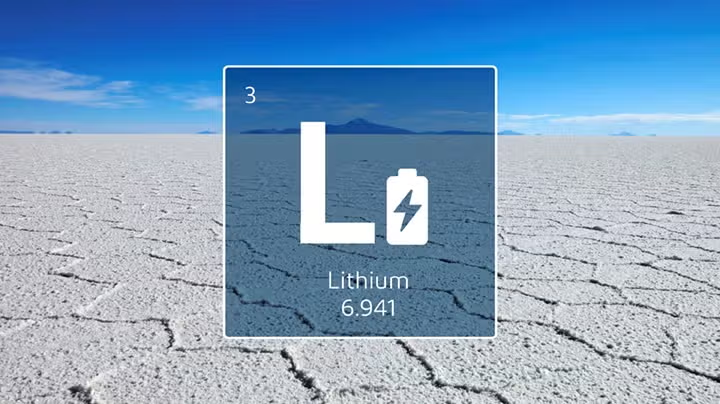
We offer a comprehensive DLE portfolio spanning pretreatment through polishing, integrating membranes, adsorbents, and ion exchange resins to optimize lithium yield and address complex brine challenges.
Related resources
View by: View all resources ✕ ✕ To access secured content from DuPont Please Sign In or Sign Up below Sign In New User ? Sign Up
See what’s possible
Ask how we can bring more efficiency and cost savings to chemical processing with our innovative water treatment solutions.