Nuclear industry protection

Nuclear industry protection

The tragic disaster in Japan raises questions about protection from nuclear hazards. These questions can be divided into two main areas: ionizing radiation hazards and radioactive particle or liquid hazards.

Ionizing radiation hazards

Depending on the source, ionizing radiation may be present in the form of electromagnetic radiation (e.g., gamma rays, X-rays) or particle radiation (alpha particles, beta particles).  Some sources produce both forms of radiation. The standard protocol used to reduce radiation exposure includes applying time, distance and shielding controls.

Nuclear power plants

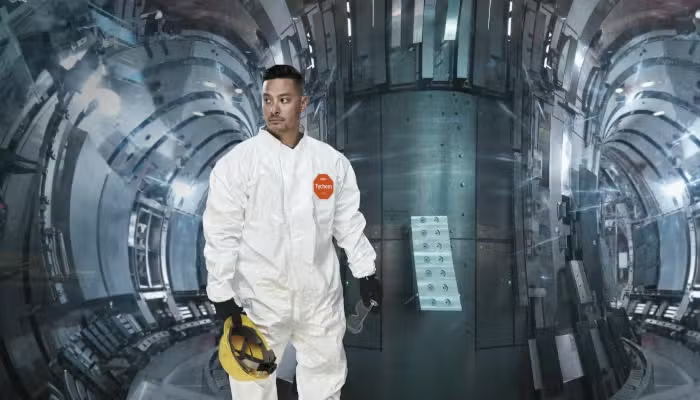
Because there is such a broad spectrum of tasks and of radioactive contamination risks, DuPont offers a wide range of nuclear protective clothing.

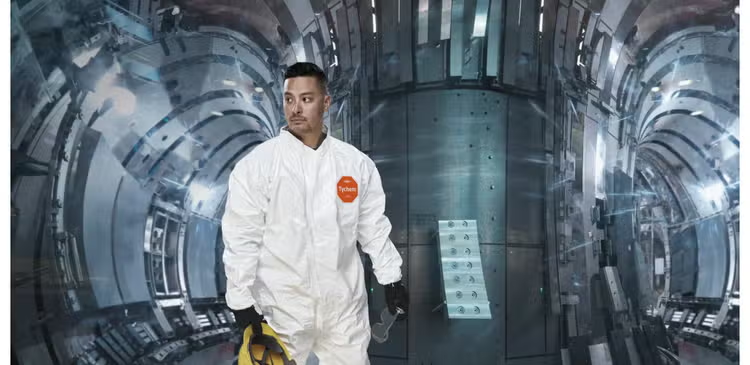
The fabrics used in single-use protective garments do not provide a barrier to electromagnetic ionizing radiation (e.g., gamma rays, X-rays). However, protective garments, like Tyvek® and Tychem® apparel, may provide limited shielding protection against radioactive alpha or beta particles. A hazard risk assessment needs to be completed for specific tasks to determine whether a DuPont garment may be suitable for use.

For garments, limited shielding also may be provided by specialty apparel that contain lead-based materials. DuPont does not offer any lead-based or other specialty garments that can provide protection from both electromagnetic and particle radiation hazards.

Radioactive contaminated particle or liquid hazards

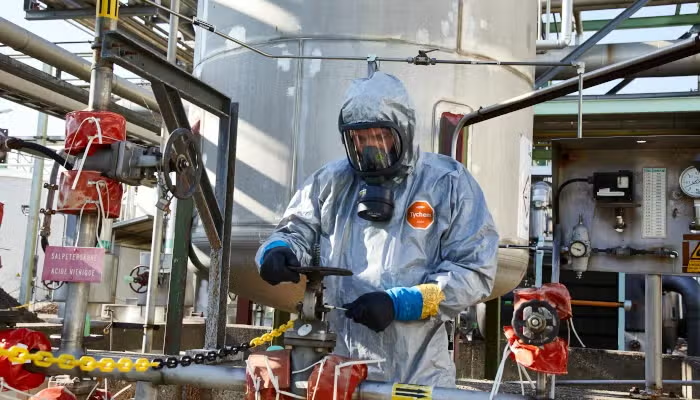
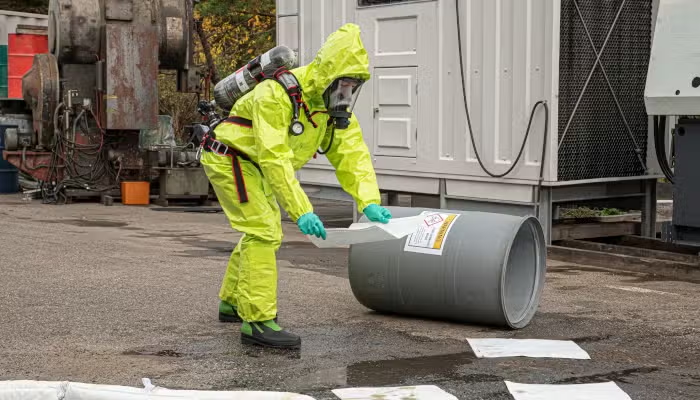
For hazards associated with radioactive contaminated particles or liquids, rather than blocking the radiation itself, appropriate garments are designed to minimize the penetration of radioactive materials, thereby also keeping contact with the skin and clothing worn underneath to a minimum. These garments are designed to be worn in a potentially affected area and then be promptly removed and disposed of, such that long-term exposure to the radioactive contaminated material is minimized after leaving the potentially affected area and to avoid contaminating other areas.

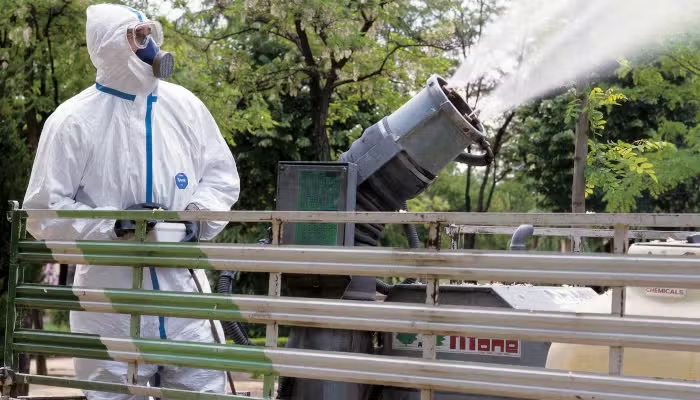
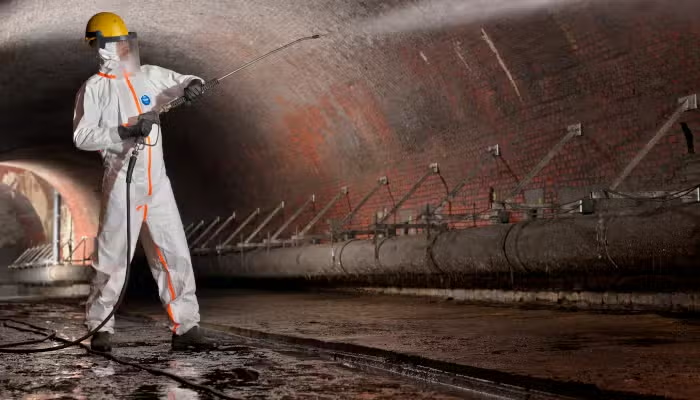
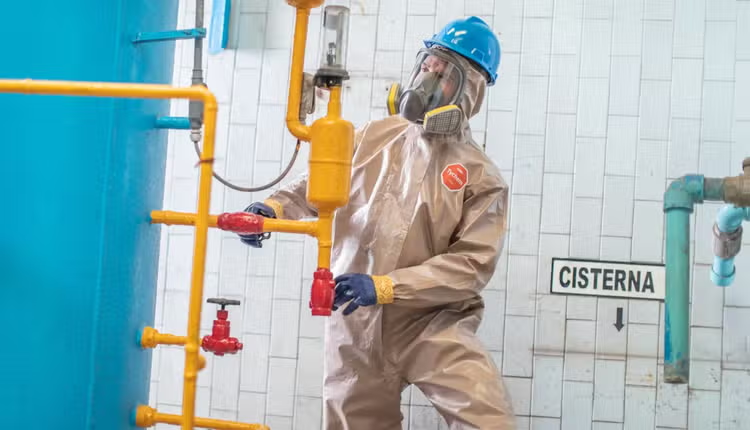
Chemical protective garments are intended for single use so that a cross-contamination with radioactive particles can be minimized. In general, more body coverage is better: hooded coveralls help keep clothing and hair free of radioactive materials. DuPont does offer specially designed garments that help provide protection from radioactive particles and liquids. Specific fabric types, seam configurations and garment designs should be specified to match the hazard. In addition, other appropriate PPE, such as but not limited to respirators, goggles, gloves and footwear, etc., as identified during the hazard assessment, should be used in conjunction with any garment selection.

Take home toxins

Workers can unknowingly bring home hazardous substances on their clothes, shoes, skin, tools and vehicle interiors. These hazardous substances are known as “take-home toxins.”  Family members are vulnerable to these toxins, which can embed themselves in furniture and laundry, circulate through household air, and be transmitted by person-to-person contact. Employers can help prevent the spread of take-home toxins by choosing the right protective garments for workers and requiring them to don and doff them on-site.

Product Solutions
Tyvek® 400 Tyvek® 400

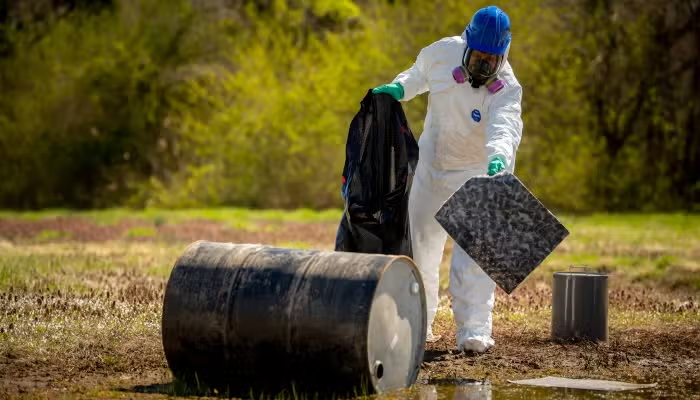
Tyvek 400 protective apparel fabric provides the ideal balance of protection, durability, and comfort and offers an inherent barrier against hazardous particles down to 1.0 micron in size. Tyvek® apparel’s comfort-fit design improves worker mobility and makes garments easier to put on and take off. Available garments include coveralls with respirator-fit hood and attached skid-resistant boot cover options, as well as a variety of accessories including hoods, sleeves, and skid-resistant boot and shoe covers.

Explore Tyvek® 600 Tyvek® 600

Tyvek® 600 coveralls offer the durability and comfort of Tyvek® with protection against radioactive and other hazardous particles as small as 1.0 micron. The fabric offers chemical permeation barrier to low concentration water-based inorganic chemicals, including sulfuric acid, sodium hydroxide, and sodium hypochlorite. The serged and over-taped seams provide additional protection and strength.

Explore Tyvek® 800 Tyvek® 800

Tyvek® 800 coveralls are ideal for situations that require protection from liquid spray, even in a pressurized jet form. The fabric provides protection against low-concentration water-based organic chemicals. The sewn and over-taped seams provide strong chemical resistance against heavy liquid splashes and tough seam stress.

Explore Tychem® 4000 Tychem® 4000

Tychem® 4000 delivers effective chemical protection in many nuclear environments. The fabric provides at least 30 minutes of protection against more than 124 chemical challenges, including hydrazine and potassium chromate.

Explore Tychem® 5000

Tychem® 5000 fabric is strong and durable for rigorous activities and rugged situations involving liquid splash. Provides at least 30 minutes of protection against >145 chemical challenges.

Explore Tychem® 6000 Tychem® 6000

Tychem® 6000 fabric provides at least 30 minutes of protection against more than 180 challenge chemicals including toxic industrial chemicals and chemical warfare agents, including nerve agent often used as flame retardant hydraulic fluids. Tychem® 6000 garments are strong, durable, and lightweight.

Explore Tychem® 10000 Tychem® 10000

Tychem® 10000 exhibits excellent chemical barrier properties and offers an extremely durable fabric that is puncture- and tear-resistant. Tychem® 10000 fabric provides at least 30 minutes of barrier protection against more than 322 challenge chemicals, including trimethyl phosphate. Tychem® 10000 is specifically developed for protection against toxic and corrosive gases, liquids, and solid chemicals, as well as chemical warfare agents. Tychem® 10000 Encapsulated Level A suits help provide protection in vapor release incidents.

Explore

<span class="fontsize20">Let us guide you! Contact a DuPont Sales Representative directly, or use the SafeSPEC™ Assistant for further assistance ! </span>

Contact Enter valid Email Address. Enter Email Address.

By submitting, you agree to our Privacy Policy

https://www.dupont.com/personal-protection/protective-apparel-contact-us.html

<center><span style="color: #e4001c; text-align:center" class="fontsize22">SafeSPEC™</span><br><br><br><span class="fontsize14"">Find the right protective product for your job with SafeSPEC™.</span></center>

<center><span style="color: #e4001c; text-align:center" class="fontsize22">SafeSPEC™</span><br><br><br><span class="fontsize14"">Find the right protective product for your job with SafeSPEC™.</span></center>

<center><span style="color: #e4001c" class="fontsize22">Resource library</span><br><br><br><span class="fontsize14">Find technical information, videos, webinars and case studies about DuPont PPE here.</span><br></center>

<center><span style="color: #e4001c" class="fontsize22">Resource library</span><br><br><br><span class="fontsize14">Find technical information, videos, webinars and case studies about DuPont PPE here.</span><br></center>

<center><span style="color: #e4001c" class="fontsize22">Where to buy</span><br><br><span class="fontsize14"">Find distributors of DuPont products including Tyvek®, Isoclean®, Tychem®, ProShield® and related products</span><br></center>

<center><span style="color: #e4001c" class="fontsize22">Where to buy</span><br><br><span class="fontsize14"">Find distributors of DuPont products including Tyvek®, Isoclean®, Tychem®, ProShield® and related products</span><br></center>